If you sell to other businesses, you already know the pain. Half your leads have old job titles. Emails bounce. Phone numbers go nowhere. Your sales team spends hours hunting for the right person instead of talking to them.
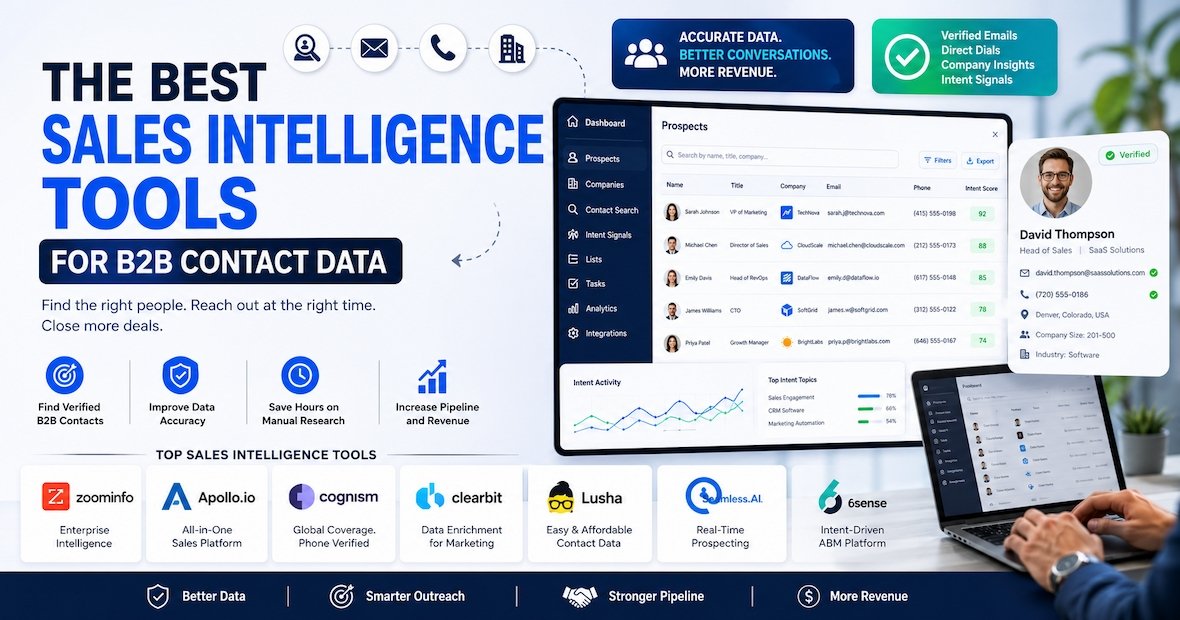
This is why so many teams search for the best sales intelligence tools for B2B contact data. These tools pull together verified emails, phone numbers, job changes, and company signals in one place. They save reps hours every week and help you reach the right person before your competitor does.
In this guide, we break down the top platforms, how they compare, what to look for, and how to pick the right one for your team's size and budget.
Quick Answer
The best sales intelligence tools for B2B contact data in 2026 are ZoomInfo, Apollo.io, Cognism, Clearbit, Lusha, Seamless.AI, and 6sense. Each one focuses on a different mix of contact accuracy, pricing, and buying-intent signals. Small teams usually do well with Apollo.io or Lusha. Larger sales orgs that need deep firmographic data and intent signals tend to choose ZoomInfo or 6sense.
What Is Sales Intelligence Software?
Definition: Sales intelligence software is a tool that collects, verifies, and organizes data about businesses and the people who work there. This includes emails, phone numbers, job titles, company size, funding news, and buying signals. Sales teams use this data to find the right contacts and reach out at the right time.
Think of it as a research assistant that never sleeps. Instead of your reps manually searching LinkedIn and guessing email formats, the software hands them a verified contact list built around your ideal customer profile.
Key Takeaway
- Sales intelligence tools save reps 5 to 10 hours a week on manual research.
- Verified B2B contact data reduces bounced emails and wasted calls.
- The right tool depends on your team size, budget, and how much intent data you need.
- Most platforms offer a free trial or limited free tier, so test before you buy.
Why B2B Contact Data Accuracy Matters
Bad data is expensive. Studies from data quality firms show that B2B databases decay by around 30% each year. People change jobs, companies merge, and phone numbers get reassigned.
If your sales team is working from a stale list, they are wasting time on dead leads. This directly hurts pipeline and revenue. That is the core reason companies invest in dedicated sales intelligence platforms instead of relying on spreadsheets or old CRM exports.
A good sales intelligence tool refreshes its database constantly. It checks emails against real-time verification systems and flags outdated records before your reps waste a call on them.
How to Choose the Best Sales Intelligence Tool for B2B Contact Data
Picking a tool is not just about the biggest database. Follow these steps to find the right fit.
- Define your ideal customer profile. Know the industries, company sizes, and job titles you want to target before comparing tools.
- Check data accuracy claims. Ask for a trial and test real contacts you already know. See how many emails and numbers are correct.
- Compare pricing models. Some tools charge per seat, others charge per credit or per contact unlocked. Match this to how often your team pulls new data.
- Look at CRM integration. The tool should sync cleanly with Salesforce, HubSpot, or whatever CRM you already use.
- Review intent data features. If you want to know when a company is actively researching your product category, look for built-in intent signals.
- Test customer support. Reach out with a question during your trial. Slow support now usually means slow support later.
- Read recent user reviews. Check G2 or Capterra for reviews from the last six months, since data quality can change fast.
Comparison Table: Top Sales Intelligence Tools for B2B Contact Data
| Tool | Best For | Starting Price | Contact Accuracy Focus | Intent Data |
|---|---|---|---|---|
| ZoomInfo | Large sales teams | Custom pricing | Very strong, large database | Yes |
| Apollo.io | Startups and SMBs | Free tier, paid from ~$49/mo | Strong, growing fast | Yes |
| Cognism | European B2B outreach | Custom pricing | Strong, phone-verified | Yes |
| Clearbit | Marketing and enrichment | Custom pricing | Strong for firmographics | Limited |
| Lusha | Small sales teams | Free tier, paid from ~$36/mo | Good, budget friendly | No |
| Seamless.AI | High-volume prospecting | Free tier, paid from ~$147/mo | Good, real-time search | Limited |
| 6sense | Enterprise ABM | Custom pricing | Strong, intent-first | Yes |
Pricing changes often, so always confirm current rates on the vendor's site before you commit.
1. ZoomInfo
ZoomInfo is one of the most established names in sales intelligence. It combines a massive B2B contact database with org charts, technographics, and buying signals.
Good for: Mid-size to enterprise sales teams that need deep company data alongside contact details.
Watch out for: Pricing is not public, and contracts can be long. It is often too much tool, and too much cost, for very small teams.
2. Apollo.io
Apollo.io has grown fast because it combines a contact database with built-in email sequencing and a generous free tier. Many startups start here because they can prospect and outreach in the same platform.
Good for: Small and mid-size teams that want contact data plus outreach tools in one subscription.
Watch out for: Data accuracy in smaller or newer companies can be less reliable than in ZoomInfo's larger dataset.
3. Cognism
Cognism focuses heavily on phone-verified data, which matters if your team does a lot of cold calling. It is also strong for teams selling into European markets, where GDPR compliance around contact data is a bigger concern.
Good for: Sales teams that rely on outbound calling and need GDPR-compliant data in Europe.
Watch out for: Pricing is on the higher end and usually requires a sales call to get a quote.
4. Clearbit
Clearbit (now part of HubSpot) is built more for enrichment than cold outreach lists. It is great at filling in missing details on leads you already have, like company size, industry, and tech stack.
Good for: Marketing teams that want to enrich form fills and website visitors with company data.
Watch out for: It is not the best standalone choice if you need a large list of brand-new contacts to prospect.
5. Lusha
Lusha is a lightweight, budget-friendly option that plugs into LinkedIn through a browser extension. Reps can pull a verified email or phone number while browsing a prospect's profile.
Good for: Small teams or individual reps who want quick contact lookups without a big learning curve.
Watch out for: It lacks the deep company intelligence and intent data that bigger platforms offer.
6. Seamless.AI
Seamless.AI markets itself as a real-time search engine for contact data, pulling information as you search rather than only from a static database.
Good for: Teams that want high search volume and do not mind a steeper price for unlimited-style plans.
Watch out for: Some users report more inconsistent accuracy compared to ZoomInfo or Cognism.
7. 6sense
6sense leans into intent data first, contact data second. It tracks buying signals across the web and tells you which accounts are actively in-market before they ever fill out a form.
Good for: Enterprise teams running account-based marketing (ABM) who want to prioritize accounts, not just collect contacts.
Watch out for: It is built for ABM strategy, so smaller teams without an ABM motion may find it overkill.
Best Practice:
- Always verify a sample of contacts during your free trial before buying a full plan.
- Set a data refresh cadence. Re-sync your CRM with your sales intelligence tool monthly, not once a year.
- Combine contact data with intent signals when possible. A correct email is only useful if the timing is right too.
- Train reps to flag bad data back into the tool. Most platforms improve accuracy when users report errors.
Real Example
A 12-person SaaS sales team was using manual LinkedIn research and a shared spreadsheet. Reps spent close to 8 hours a week just finding contact details. After switching to Apollo.io, they cut that research time to under 2 hours a week and increased outbound call connect rates by roughly 20%, based on their own internal tracking over one quarter.
This kind of result is common. The tool itself is not magic. It just removes the manual research bottleneck so reps spend more time actually selling.
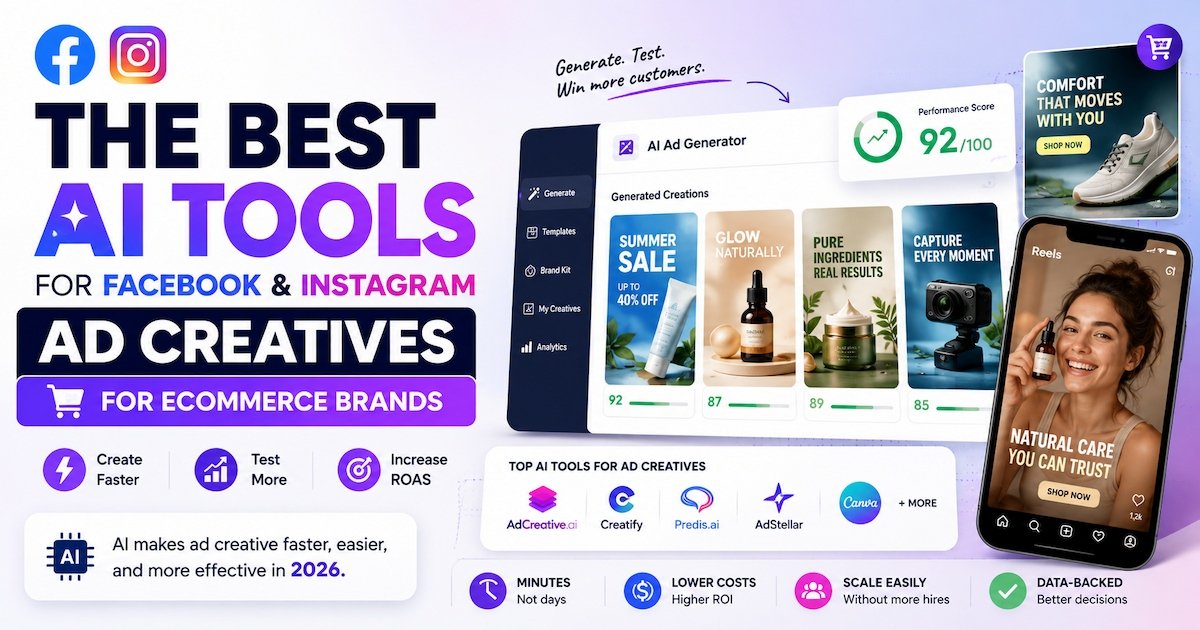
Sales intelligence helps teams find the right prospects, while marketing teams can use AI tools for Facebook and Instagram ad creatives to produce and test campaign assets faster.
Sales Intelligence Tools vs Traditional Lead Lists
| Factor | Sales Intelligence Tools | Static Purchased Lists |
|---|---|---|
| Data freshness | Updated regularly | Often outdated on arrival |
| Compliance | Built-in opt-out and GDPR tools | Often unclear sourcing |
| Cost | Ongoing subscription | One-time purchase |
| Integration | Syncs with CRM | Manual upload needed |
| Intent signals | Often included | Rarely included |
For teams selling across multiple regions, AI avatar tools for multilingual voiceovers can also help create localized sales demos, onboarding videos, and prospecting content without recording every version manually.
Frequently Asked Questions
What is the best sales intelligence tool for B2B contact data?
ZoomInfo leads for large teams needing deep data. Apollo.io is best for startups needing an affordable, all-in-one option.How accurate is B2B contact data from these tools?
Accuracy varies by vendor, typically between 85% and 95%. Always test with a trial before buying.
Are sales intelligence tools GDPR compliant?
Reputable tools like Cognism and ZoomInfo include compliance features, but you should confirm this for your specific market.
Can small businesses afford sales intelligence software?
Yes. Apollo.io and Lusha offer free tiers and low-cost plans built for small teams.
How is sales intelligence different from a CRM?
A CRM stores your existing customer relationships. Sales intelligence software finds and verifies new contact data before it enters your CRM.
Do these tools include phone numbers, not just emails?
Most do, though accuracy on direct-dial phone numbers is usually lower than email accuracy across the industry.
For an independent look at how B2B data quality standards are evolving, see Gartner's research on sales technology (external, dofollow).
Final Thoughts
There is no single best sales intelligence tool for every team. The right pick depends on your budget, your outbound strategy, and how much intent data you actually need. Start with a free trial, test real contacts, and measure connect rates before you commit to an annual plan.
If you are a small team, start with Apollo.io or Lusha. If you are scaling outbound at an enterprise level, ZoomInfo, Cognism, or 6sense will give you the depth you need.